Ancestral Weaving in the High Atlas
In the remote villages of the Atlas Mountains, where time flows with the rhythm of tradition, Berber women gather around ancient wooden looms. With each knot and thread, they pass down generations of memory, weaving wool into living narratives. These carpets are not mere textiles — they are carriers of spiritual, familial, and cultural meaning.
Symbols, Colors, and Identity
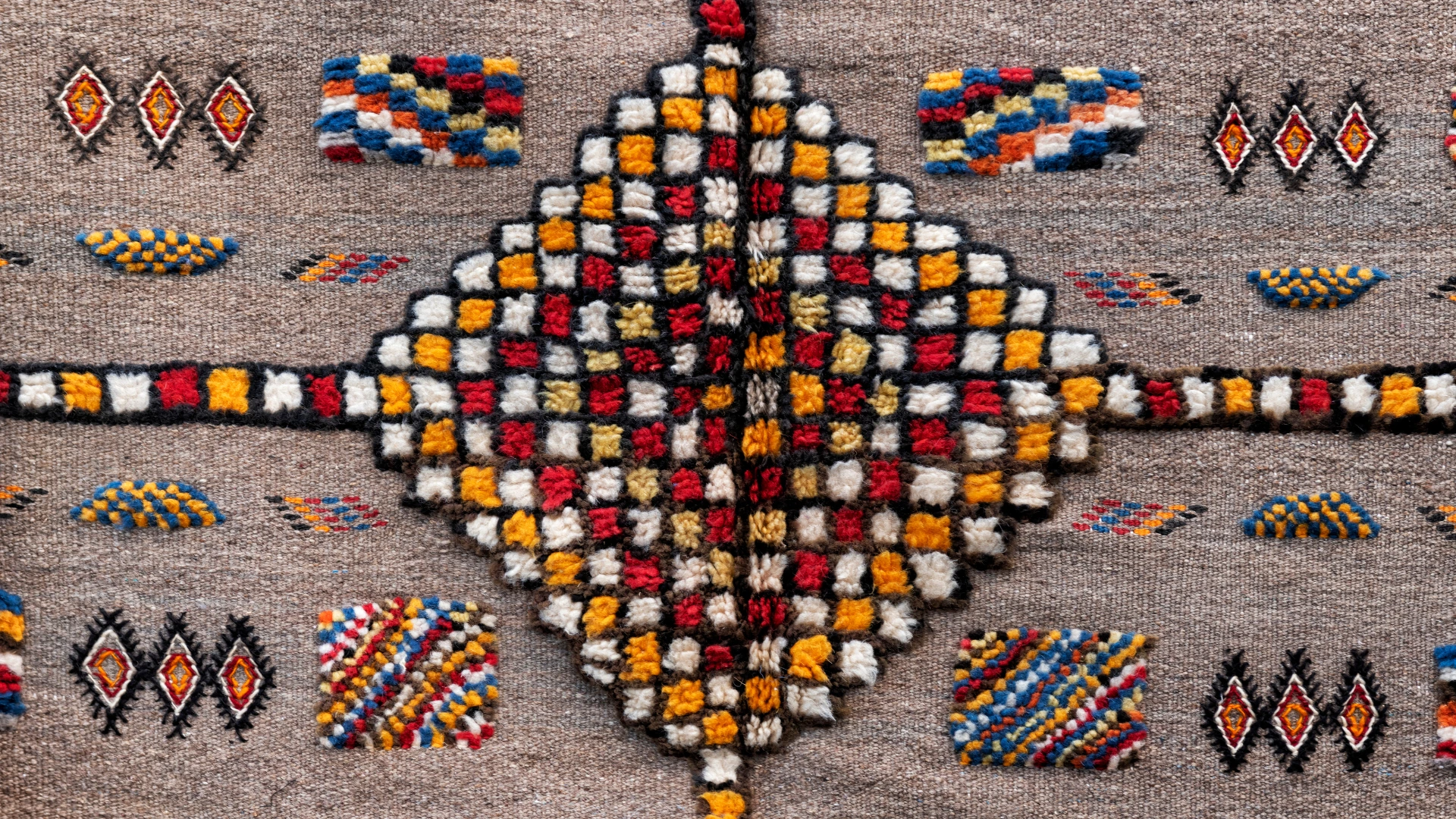
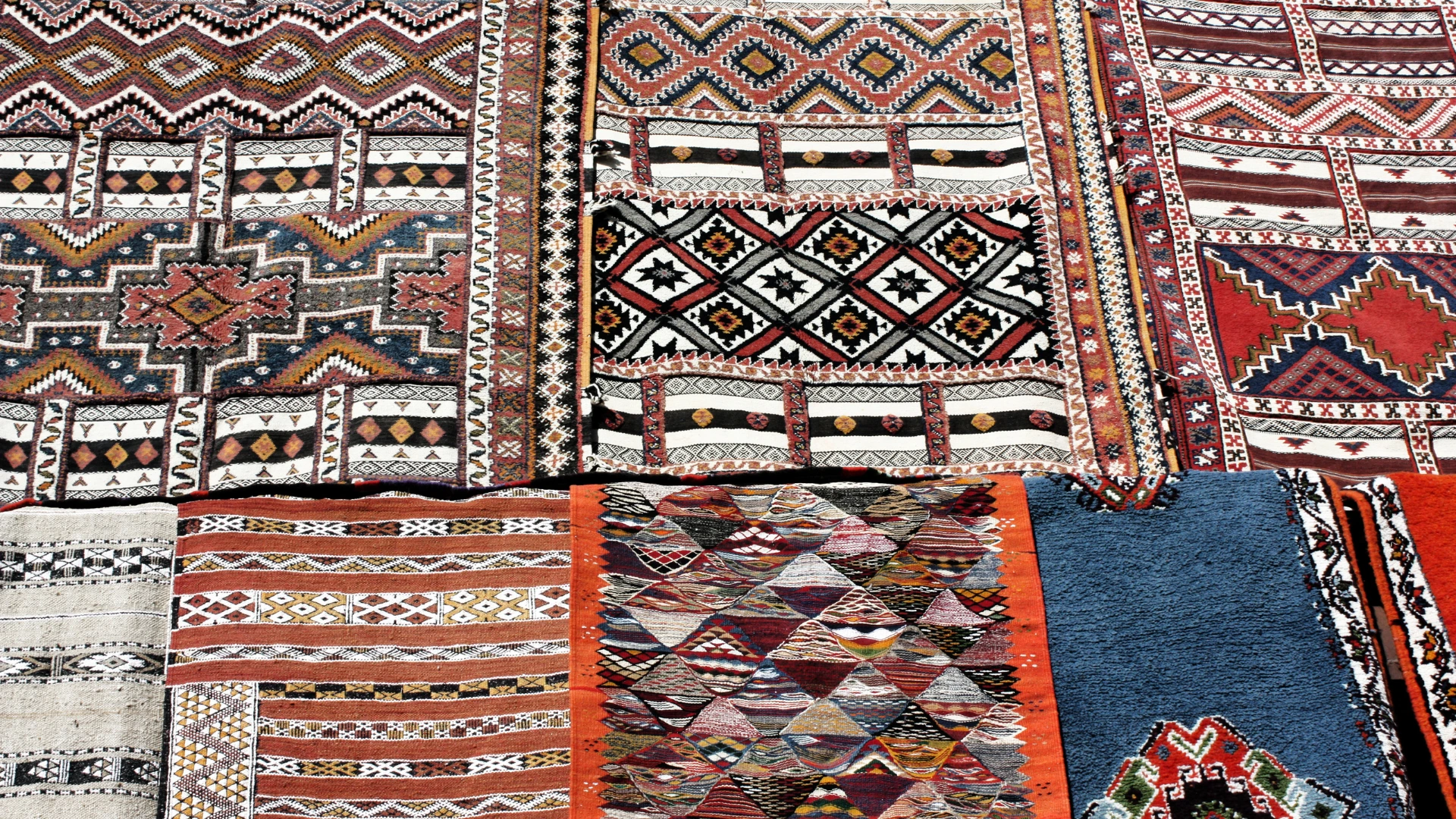
Every Moroccan carpet is a coded language. The diamonds, zigzags, and X-shapes that dance across the wool represent fertility, protection, nature, and even resistance. Colors hold emotional and spiritual weight: red for strength, blue for wisdom, yellow for eternity. Each design is deeply personal — often unique to a family, a tribe, or a village.
Women as Storytellers
Traditionally, it is Berber women who hold the sacred duty of weaving. Without patterns or sketches, they rely on memory and intuition, letting stories unfold instinctively on the loom. For many, carpets also mark life transitions — births, marriages, seasons — embedding their lives into the fabric of each piece.
Global Recognition of a Heritage Craft
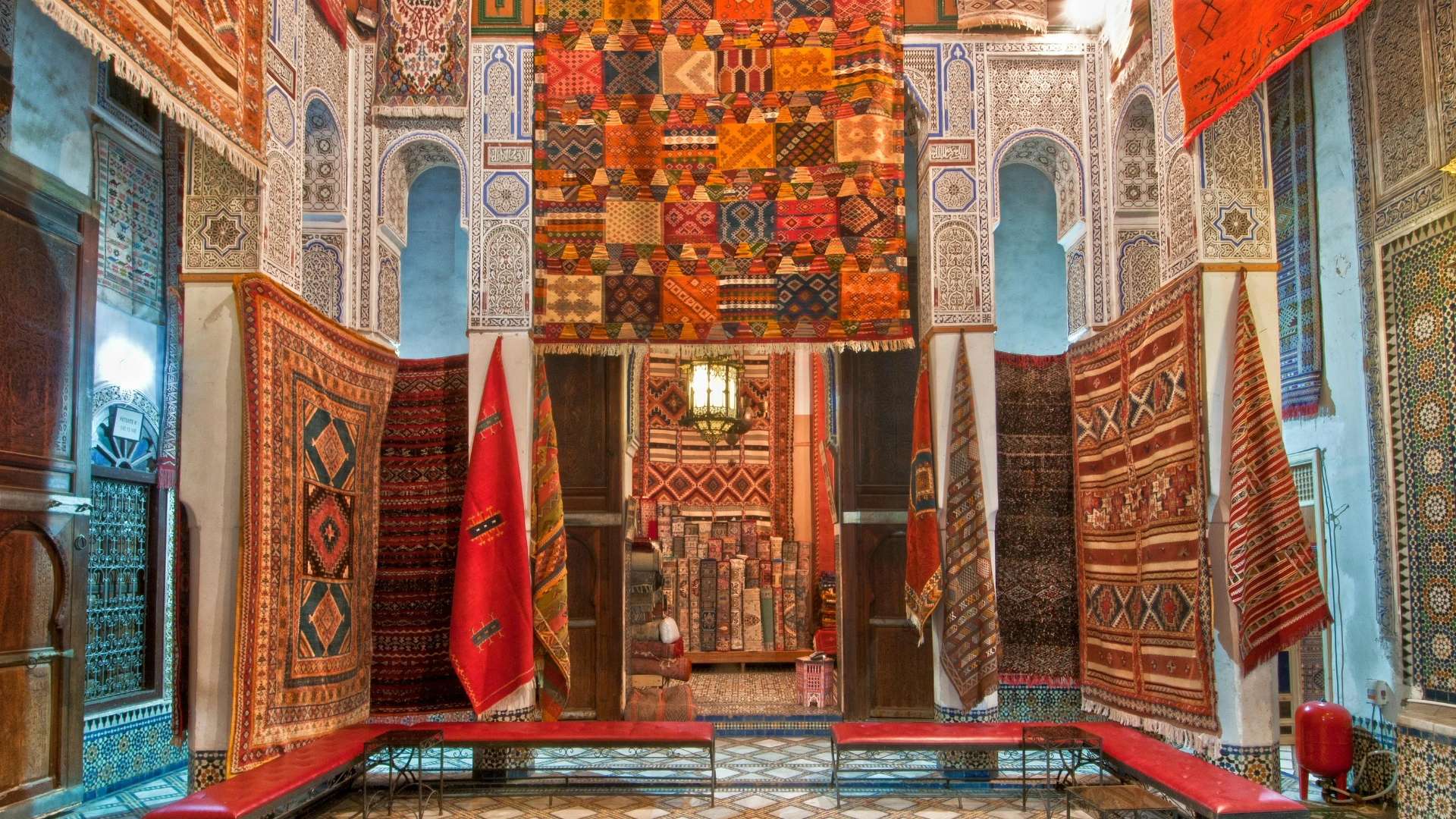
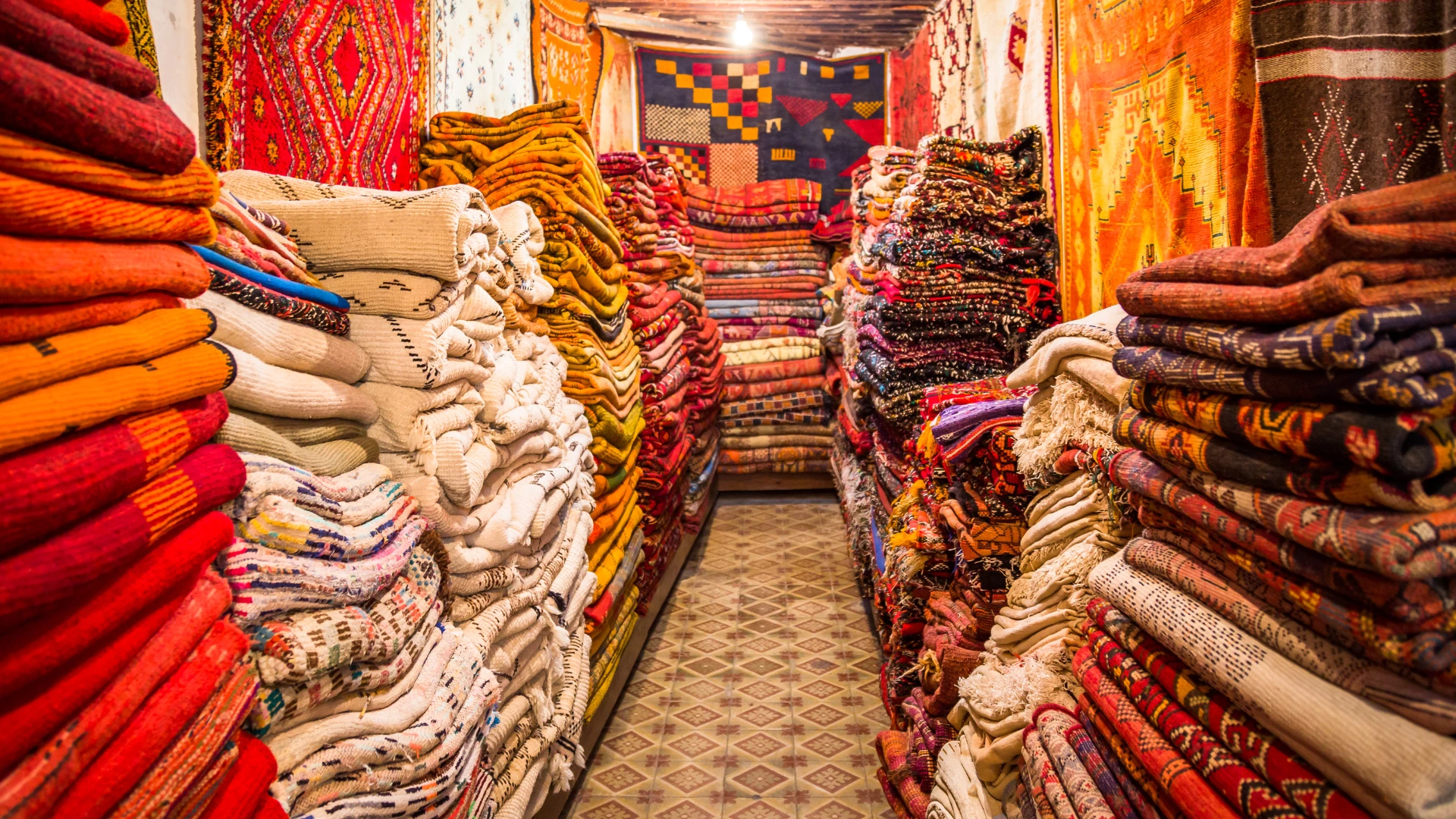
Today, Moroccan carpets are admired worldwide for their authenticity and organic beauty. International designers seek them for their imperfect symmetry and raw textures, while collectors value their cultural depth. Yet, despite this fame, the process remains mostly untouched — wool dyed with saffron, pomegranate skins, and indigo, woven entirely by hand.
A Future Tied to the Loom
As Morocco embraces modernity, efforts to preserve the art of carpet weaving are multiplying. Cooperatives are empowering female artisans with fair trade access and visibility. Younger generations are now reinterpreting patterns, blending tradition with minimalism — ensuring that these woven stories of the Atlas continue to evolve and inspire.
Galerie